
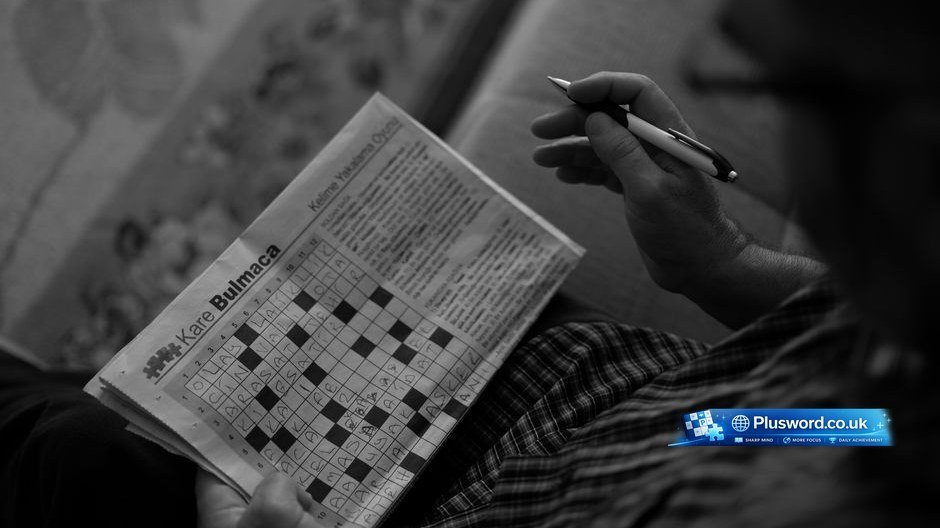
If you play the Telegraph’s daily puzzles, you have probably come across Plusword — the quick two-stage word game that starts as a 5×5 mini crossword and ends with a timed five-letter anagram. It is free, it takes a few minutes, and it is one of the most satisfying puzzles in the Telegraph’s lineup.
The quick answer: Telegraph Plusword gives you a 5×5 crossword grid. Solve it, and certain letters light up in green or yellow. Unscramble those highlighted letters into a hidden five-letter Plus Word as fast as you can. New puzzle every day at midnight.
What Is Telegraph Plusword and How Does It Work?
Telegraph Plusword combines two formats solvers already love: a quick crossword and a tile-based anagram. The first stage is a compact 5×5 grid with five across clues and five down clues — twenty-five squares, solvable in a couple of minutes. Unlike a standard crossword where finishing the grid ends the game, here the solved grid is only the halfway point.
Once every square is filled, the board reveals its second stage: green and yellow highlighted letters scattered across the grid. Those are your clues to the final five-letter Plus Word. Type it into the answer box to stop the clock. Your total time — grid plus anagram — is your score for the day.
If you are completely new to the format, our what-is-Plusword overview explains the concept, and our how-to-play walkthrough goes through each stage in detail.
How Do Color Codes Work in Telegraph Plusword?
The color system is the key to the whole game. Learn it once and the final stage becomes straightforward:
- Green squares: The letter is in the final Plus Word and already sits in the correct column (1 to 5). Lock it in.
- Yellow squares: The letter is in the Plus Word but belongs in a different column. It needs to move.
- Unshaded squares: The letter is not in the Plus Word at all. Ignore it.
The crucial rule: the final word never uses letters that were left unshaded. If a letter appears twice in the grid and only one instance is highlighted, only the highlighted one counts. Trust the colors.
5 Proven Tactics to Solve Telegraph Plusword Faster
Speed in Telegraph Plusword comes from treating the two stages as one continuous sprint. Here are five tactics that consistently cut times:
| Strategy | Crossword stage | Anagram stage |
|---|---|---|
| Solve easy fill first | Scan for plurals, short words, and obvious synonyms to seed the grid. | More solved clues means more highlighted letters to work with. |
| Isolate vowels early | Confirm vowel placements through crossing answers. | Vowels anchor the five-letter word and shrink the possibilities. |
| Track unshaded letters | Once an answer is done and unshaded, forget it. | Mentally eliminates most of the alphabet from the final word. |
| Spot common pairs | Use crossings to confirm TH, SH, CH, ER, and other pairings. | Pairs often survive intact into the Plus Word. |
| Keep a clean grid | Double-check spelling before finishing — a typo gives false color hints. | Wrong colors send the anagram stage in the wrong direction. |
The single biggest time-saver is the transition: the instant the grid is complete, move your eyes to the colored letters. Solvers who pause to admire a finished grid routinely lose 20–30 seconds. Read more in our guide to common Plusword mistakes.
Where to Play Telegraph Plusword
The official game lives on the Telegraph’s puzzles page, alongside their quick and cryptic crosswords, Codewords, and Sudoku. It is free to play, with a fresh board every day at midnight. If you enjoy the Telegraph’s crossword style, you may also like our quick crossword answers guide.
For the general history of the format, Wikipedia’s crossword article is a solid background read.
Frequently Asked Questions About Telegraph Plusword
Where can you play Telegraph Plusword for free?
On the Telegraph’s puzzles page, which hosts the official daily board along with their other puzzles. It is free, with a new puzzle every day at midnight.
What is a good time for Telegraph Plusword?
Most casual solvers finish between 90 seconds and 3 minutes. Experienced players regularly go under 90 seconds. Anything under two minutes is a strong daily result.
Do I need a Telegraph subscription to play Plusword?
The daily Plusword board is free to play on the Telegraph’s puzzles page. Some Telegraph puzzles and features sit behind a subscription, but Plusword itself does not require one.
What are the rules for the final Plus Word?
Unscramble the green and yellow highlighted letters into a valid five-letter English word. Green letters are already in the correct column; yellow letters belong in the word but in a different column. Submit it to stop the timer.
Your Next Move
Telegraph Plusword rewards the same two skills every day: fast, confident crossword solving and a quick eye for anagrams. Learn the color system cold, transition between the stages without pausing, and track which mistakes cost you time. Do that for a week and your times will fall — and if you want more puzzles between boards, our best games like Plusword will keep you sharp.