
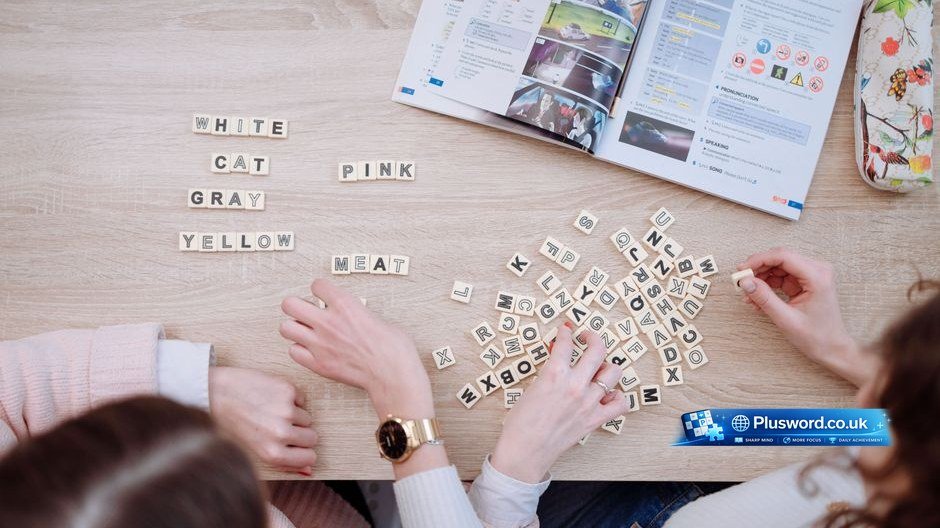
If you have ever found yourself staring blankly at a grid of letters with only two guesses remaining, you know how frustrating daily word games can be. Whether you play during your morning commute or as an evening wind-down, mastering actionable word puzzle strategies transforms chaotic guessing into a predictable, satisfying science.
At its core, word puzzle strategies refer to systematic methods of analyzing letter placement, structural frequency, and linguistic patterns to deduce unknown words within limited attempts. Rather than relying on lucky guesses, expert solvers use deliberate elimination tactics that make victory almost guaranteed.
Quick summary: Top word puzzle strategies rely on letter frequency analysis, structural vowel placement, consonant pairing, and tactical process-of-elimination techniques to solve daily word challenges consistently without guessing.
Who this guide is for: This guide is written for the audience of casual and daily word game players who want practical methods to improve their solve speed and completion rates across puzzles like Wordle, Plusword, and crosswords.
7 Proven Word Puzzle Strategies to Master Any Daily Game
Winning daily word challenges consistently comes down to how efficiently you gather information with every move. Here are seven structured tactical steps you can apply immediately to sharpen your problem-solving process.
- Prioritize High-Frequency Opening Words: Start your games with starter words containing a mix of top vowels (A, E, O) and high-utility consonants (T, R, N, S). Words like “SLATE,” “CRANE,” or “AUDIO” instantly map out critical phonetic anchors.
- Exploit Common Letter Pairings (Digraphs): When developing effective word puzzle strategies, letter frequency dictates your next move. Look for natural pairs like TH, CH, SH, PH, ST, and TR. Recognizing digraphs narrows down potential combinations far faster than treating each slot independently.
- Isolate Word Endings First: English words heavily lean on standardized suffixes. If you uncover an E, S, Y, or ING at the end of a puzzle, immediately test structural combinations like -ER, -ED, -LY, or -EST. Locking in the ending drastically reduces possible remaining answers.
- Track Unused Letters Actively: Beginners often focus solely on green or correctly placed letters. However, knowing which letters are completely off the table is equally valuable. Cross-referencing your available keyboard prevents wasted moves on impossible words.
- Use Symmetrical Grid Deduction: In spatial or grid-based games, check how horizontal solutions influence vertical spaces. If you are learning how to solve crossword puzzles efficiently, cross-checking intersecting letters eliminates multi-option ambiguity early on.
- Test Compound Vowel Formations: When multiple vowels are present, check for common dipthongs like OU, AI, EA, and OI. Recognizing vowel clusters prevents you from splitting vowels across distant positions where they rarely belong.
- Avoid the Single-Letter Traps: If you find a pattern like _IGHT or _OUND, resist guessing single starting consonants one by one. Use a tactical throwaway guess that combines multiple candidate consonants (e.g., testing B, M, P, and F in one word) to pinpoint the exact match instantly.

Another core element of sound word puzzle strategies involves testing common consonant blends early when main vowels fail to turn up. When you systematically restrict letter options, the final solution practically reveals itself.
How Do Vowels Help in Word Puzzle Strategies?
Vowels act as anchors in word puzzle strategies because almost every English syllable requires at least one vowel to function. By identifying where vowels live in a target word, you instantly establish its structural backbone and eliminate dozens of mismatched letter combinations.
According to Wikipedia’s research on letter frequency, letters like E, T, A, O, and I appear far more frequently in the English language than letters like Q, X, or Z. Knowing this structural bias allows you to prioritize high-yield consonants right alongside your initial vowel testing.
| Vowel Placement Pattern | Common English Word Example | Strategic Tactical Advantage |
|---|---|---|
| Medial Single (CVC) | TRACK, PLUMB | Isolates center vowels (A, U, I) early in five-letter structures. |
| Split Vowel (Silent E) | SHINE, CRATE | Signals an elongated vowel sound with E fixed at the final slot. |
| Double Vowel Center | BREAM, SHOCK | Identifies high-density vowel pairs (EA, OA, OO) in positions 2 and 3. |
Applying structured word puzzle strategies helps you eliminate unlikely consonant combinations as soon as the main vowel positions are confirmed. For instance, finding an O in slot 2 and an E in slot 5 strongly suggests words ending in -OKE, -OSE, or -ONE.
Tactical Letter Elimination and Pattern Recognition
Process of elimination is your single most reliable weapon in word games. When faced with missing pieces, skilled players use tactical burner words—guesses designed purely to test remaining unverified letters rather than hit the jackpot immediately.
What Are the Best Word Puzzle Strategies for Grid-Based Games?
Grid-based games demand unique word puzzle strategies that prioritize cross-referencing intersecting letters before committing to answers in tight spaces. In mini-crosswords or spatial daily puzzles, solving short three-letter anchor words opens up intersecting routes across the entire board.
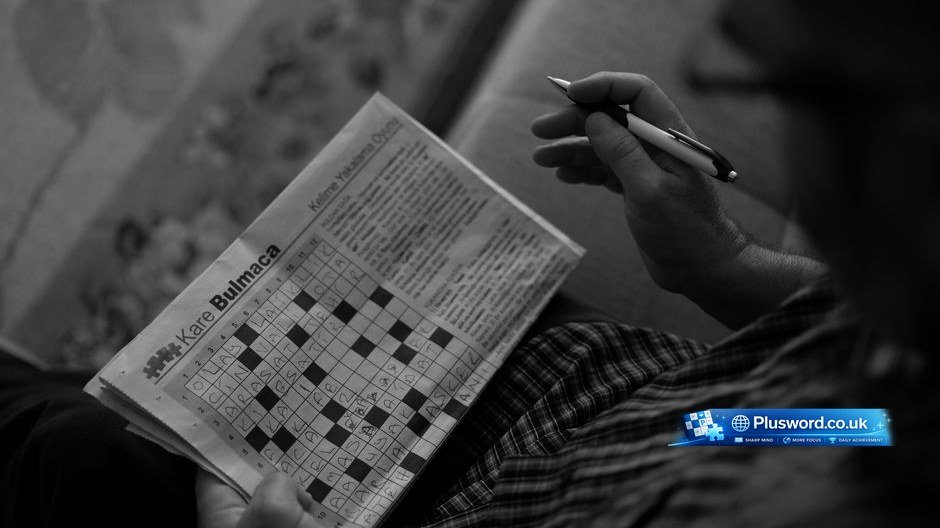
In practical use, players frequently blunder by sticking to linear line-by-line solving. A far better approach is hopping around the board to solve the easiest overlapping clues first, giving you free starting letters for the trickier words nearby. Combining these methods with actionable daily word puzzle tips creates an effective daily solving routine.
A frequent error when executing word puzzle strategies is falling into single-letter traps—guessing “MIGHT,” then “NIGHT,” then “SIGHT” until your limited attempts run out. Instead, recognize when a word structural template has multiple possible prefixes and burn a word like “STUMP” to evaluate S, T, M, and P simultaneously.
Frequently Asked Questions
What is the most effective starting move for daily word puzzles?
The best starting move is using words containing high-frequency vowels (A, E, O) and common consonants (T, R, N, S). This maximizes your chances of uncovering critical letter placements on your very first attempt.
How can I improve my vocabulary for daily word games?
You can improve your vocabulary naturally by reviewing common prefix and suffix structures, solving daily crosswords, and keeping track of recurring five-letter and six-letter game words that frequently appear in puzzle pools.
Do these word puzzle strategies work on all word puzzle apps?
Yes, advanced word puzzle strategies apply across games like Wordle, Plusword, NYT Connections, and traditional crosswords because they rely on fundamental linguistic patterns and logical elimination rather than platform-specific mechanics.
What should I do when I get stuck on a tricky word grid?
Step back and list all remaining unused letters, then experiment with uncommon consonant pairings or scan intersecting grid spaces to reveal potential letter candidates through process of elimination.
Your Next Move to Master Daily Word Games
By applying these word puzzle strategies systematically, you will consistently lower your solve times and eliminate win-streak anxiety. The transition from casual guessing to deliberate deduction comes down to habit: open with high-value letter combinations, use burner guesses when confronted with multi-option traps, and pay as much attention to excluded letters as included ones.
To take your skills further today, pick one specific game in your daily rotation and practice applying a burner word whenever you hit a three-option fork in the road. Tracking your solve rates over the next two weeks will give you clear, measurable proof of how structured letter elimination pays off in every puzzle you open.