
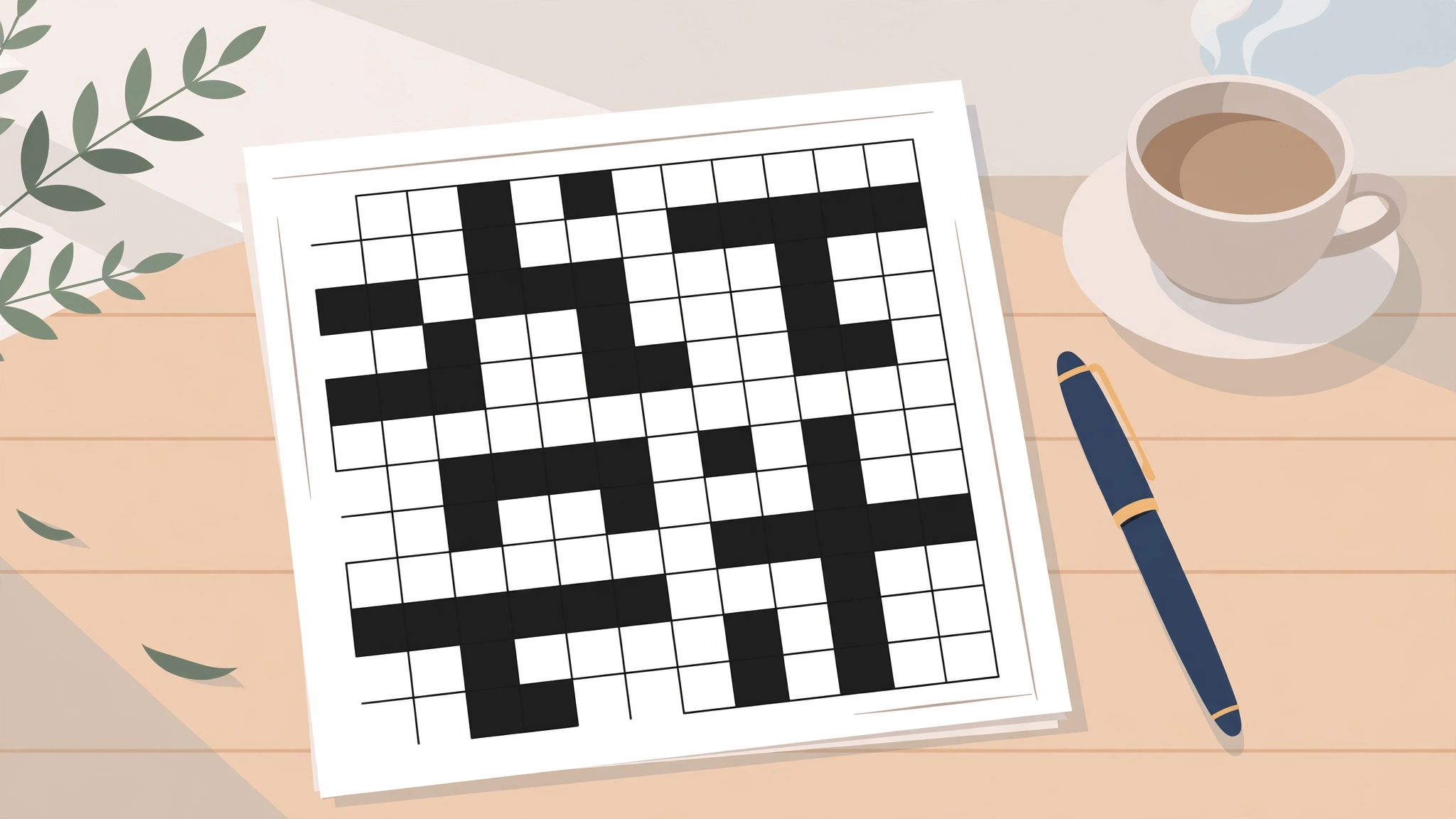
The Telegraph Quick Crossword is the Daily Telegraph's daily non-cryptic crossword puzzle, printed in the morning edition and published on the Telegraph's puzzles site. It uses a 13×13 grid with straightforward definition-style clues, making it far more approachable than the paper's famous cryptic crossword — most solvers finish it in 10 to 20 minutes.
If you enjoy word puzzles but find cryptic crosswords impenetrable, the Quick Crossword is the Telegraph's answer: all the satisfaction of a finished grid, none of the fiendish wordplay. This guide explains how it works, where to play it, the clue types you will meet, and practical strategies to solve it faster.
What Is the Telegraph Quick Crossword?
The Quick Crossword appears daily in the Daily Telegraph, one of Britain's most crossword-obsessed newspapers. While the Telegraph is legendary for its cryptic crossword — a puzzle that has been running since 1925 — the Quick Crossword serves a different audience: solvers who want a satisfying daily puzzle without learning cryptic conventions.
The format is a standard blocked crossword on a roughly 13 by 13 grid. Every clue is a plain-English definition, synonym or general-knowledge question. Unlike the cryptic, there are no anagrams-within-clues, no hidden words, no "sounds like" tricks. The clue "Large mammal found in Africa (8)" simply wants ELEPHANT.
A new puzzle is published every day, and the Telegraph's own website and app carry the interactive version, with solutions posted shortly after publication. Answer archive sites such as CrosswordGiant also keep dated records of past puzzles — for example, the site archives "The Telegraph Quick Crossword No: 775" with full clue-and-answer tables.
Quick Crossword vs Cryptic Crossword
The two Telegraph crosswords share a grid style but almost nothing else. Here is how they compare:
| Feature | Quick Crossword | Cryptic Crossword |
|---|---|---|
| Clue style | Straightforward definitions | Wordplay + definition in every clue |
| Typical grid | ~13×13 | ~15×15 |
| Solve time | 10–20 minutes | 30 minutes to hours |
| Skill needed | Vocabulary, general knowledge | Cryptic conventions (anagrams, hidden words, homophones) |
| Beginner friendly | Yes | Notoriously difficult |
| Daily | Yes | Yes |
If you are new to crosswords, start with the Quick. Many solvers use it as a warm-up before attempting the cryptic — or as their entire daily ritual.
Common Clue Types in the Quick Crossword
The clues are "quick" rather than cryptic, but they still draw on a familiar toolkit:
- Straight definitions. The most common type: "Fasten (6)" = ATTACH, "Flower part (6)" = ANTHER.
- Synonyms. "Happy" might be clued to get JOYFUL or ELATED; "Difficult" becomes TRYING.
- Double definitions. A clue offering two meanings for one answer, e.g. "Wind" could be ZEPHYR (a breeze) — well, a single-definition example; true double definitions give two synonyms for the same word.
- Fill-in-the-blank. Clues with a missing word, such as "The __ Guy" pointing to a film title.
- Anagrams (marked). Occasionally a clue is marked "(anag.)", e.g. "Proust (anag.)" = STUPOR — a straightforward anagram signal.
- Abbreviations. Crossword staples: N for north, S for south, Dr for doctor, St for saint or street.
- Foreign terms. "Yes in Spanish" = SI; occasional French or Latin words appear.
- General knowledge. Greek letters (LAMBDA), constellations (ZODIAC), currencies and capitals.
How to Solve the Telegraph Quick Crossword: 7 Tips
- Start with the gimmes. Fill in every answer you are confident about first. Early momentum matters — each solved word gives you crossing letters.
- Use crossing letters aggressively. A half-filled answer plus a definition narrows possibilities dramatically. Write in lightly until confirmed.
- Learn the standard abbreviations. N, S, E, W for compass points; Dr, St, Rev, Rt Hon. They recur constantly.
- Watch for anagram signals. When you see "(anag.)" or "mixed", rearrange the letters of the fodder word.
- Think short words as anchors. Common two- and three-letter answers (AN, THE, ODE) unlock large parts of the grid.
- Read the clue twice. Quick clues are literal, so the answer is usually the most obvious definition. Overthinking is the classic error.
- Come back fresh. If one clue resists, move on. Later, crossing letters or a fresh look will usually crack it.
Where to Play and Find Answers
The official home is the Telegraph's own puzzles website and mobile app, which publish the daily puzzle and its solution. Note that full access to the Telegraph's puzzles typically requires a subscription — the print edition carries the puzzle each morning.
If you are stuck on a specific clue, several resources help:
- Crossword solver sites (Crossword Solver, OneAcross, Crossword Tracker) let you enter a clue or letter pattern to find candidate answers.
- Answer archives keep dated records of past Telegraph Quick Crosswords, useful for checking yesterday's solution.
- Community forums where solvers discuss tricky clues together.
A word of etiquette: peeking at an answer to learn is fine; copying a whole grid and claiming you solved it is between you and your conscience.
Why the Quick Crossword Endures
The Telegraph's cryptic gets the glory, but the Quick Crossword quietly serves a huge audience: commuters, beginners, and solvers who simply prefer clean definitions to cryptic gymnastics. It is the rare daily puzzle that is genuinely completable over a morning coffee, and that completability is exactly why people keep coming back.
If you like the daily-puzzle habit, you might also enjoy the Plusword daily word puzzle for something quicker, or our guide to choosing the right crossword puzzle book when you want a bigger challenge on paper.
The 10-Minute Method for the Quick Crossword
The Telegraph Quick Crossword is designed to be finished in 10 to 20 minutes, and solvers who treat it as a system rather than a ramble reliably hit the fast end of that range. Start with a full-grid scan: read every clue quickly and fill in the gimmes first — the short, obvious definitions — because each placed letter is a free hint for its crossings. Then work the crossings deliberately: a half-filled 9-letter answer is usually guessable from its pattern plus the clue, so attack the longest entries once they have two or three letters. Keep a mental list of Quick Crossword regulars — the short, vowel-heavy words constructors love (think ORE, EPEE, ARIA patterns) — and they will start solving themselves. Do not get stuck: if a clue resists for more than a minute, move on and return; the crossing letters you gain elsewhere often make the stubborn clue trivial on the second pass. The Quick rewards momentum over brilliance — steady forward motion through the grid beats heroic struggles on single clues every time.
What is the Telegraph Quick Crossword?
It is the Daily Telegraph’s daily non-cryptic crossword: a ~13×13 grid with straightforward definition-style clues, published every morning in print and on the Telegraph’s puzzles site.
How long does the Telegraph Quick Crossword take to solve?
Most solvers finish in about 10 to 20 minutes, depending on experience — much faster than the paper’s cryptic crossword.
Is the Telegraph Quick Crossword good for beginners?
Yes. Its plain-English clues and lack of cryptic wordplay make it one of the most beginner-friendly daily crosswords in a British newspaper.
Where can I play the Telegraph Quick Crossword online?
On the Telegraph’s official puzzles website and app. Full access usually requires a Telegraph subscription; the puzzle also appears in the print edition every morning.
Where can I find answers to the Telegraph Quick Crossword?
The Telegraph publishes solutions shortly after each puzzle. Independent answer archive sites also keep dated records of past puzzles, and crossword solver tools can help with individual clues.
What is the difference between the Quick and cryptic Telegraph crosswords?
The Quick uses straightforward definitions and takes 10–20 minutes. The cryptic hides wordplay inside every clue and is far harder, often taking 30 minutes to hours.
What grid size is the Telegraph Quick Crossword?
It is typically a 13 by 13 square grid, slightly smaller than the 15×15 cryptic grid.
Does the Telegraph Quick Crossword have themed puzzles?
Occasionally, yes — themed editions appear around holidays or special occasions, though most days are standard mixed-vocabulary puzzles. Sources: crosswordgiant.com (Telegraph Quick Crossword No: 775 archive); sensei.study and km.peoplebusiness.org Telegraph quick crossword answer guides; the-crossword-solver.com.
Do I need a subscription to play the Telegraph Quick Crossword online?
Full access to the Telegraph’s puzzles website and app usually requires a subscription. The puzzle also appears in the print edition every morning, and the Telegraph publishes solutions shortly after each puzzle.
Are Quick Crossword clues ever cryptic?
No. The Quick uses straightforward definition-style clues with plain-English wordplay-free wording — that is the whole point of the format, and what makes it one of the most beginner-friendly daily crosswords in a British newspaper.