
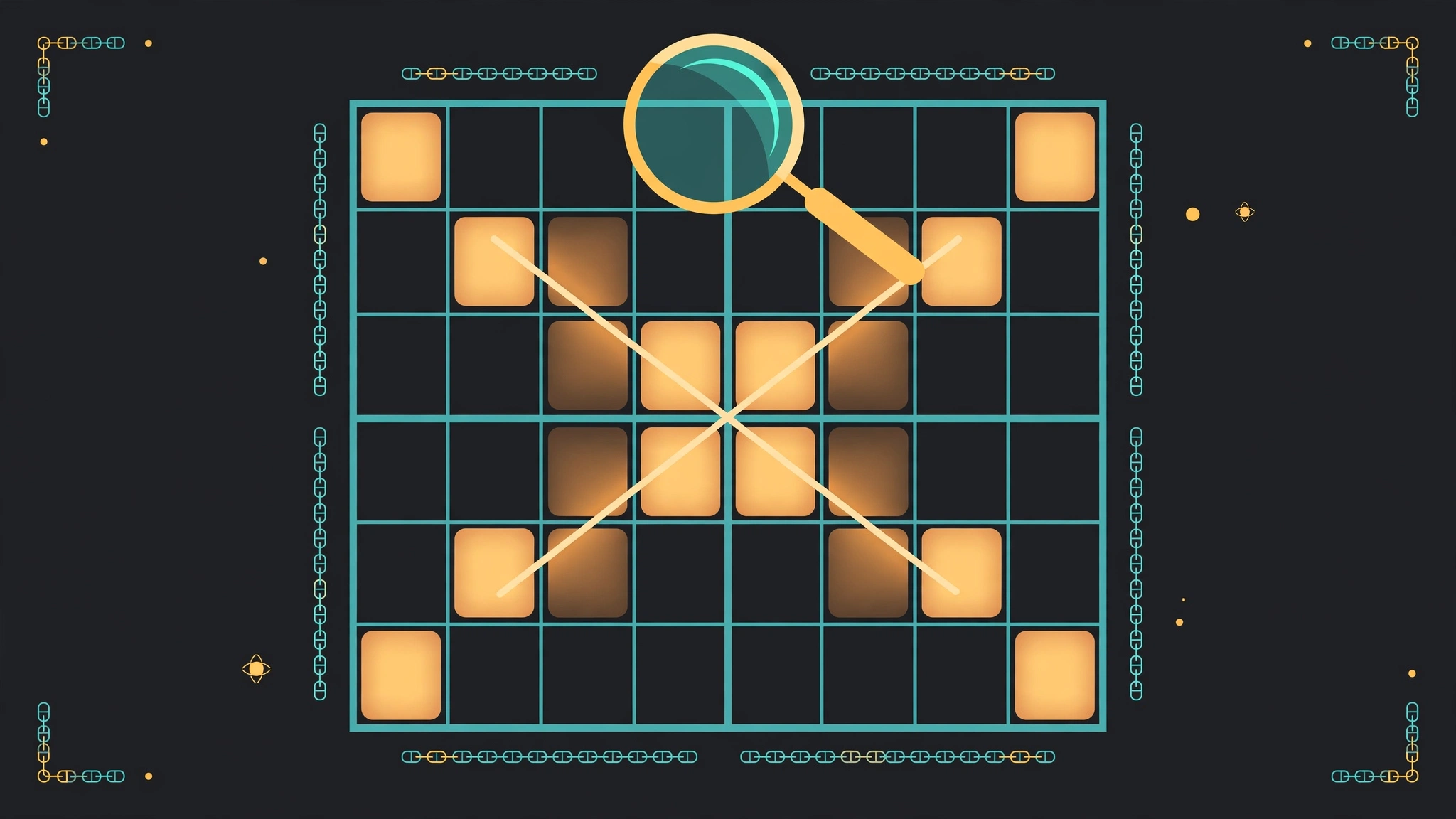
Expert sudoku puzzles are the ones where basic scanning stops working on the 9×9 grid. Naked singles dry up, hidden singles hide, and the grid just sits there. Solving at expert level means learning a small arsenal of advanced techniques — patterns like X-Wing, Swordfish and XY-Wing — that eliminate candidates logically so you never have to guess.
The number puzzle itself dates to 1979, when American architect Howard Garns published it as "Number Place" in Dell Magazines; Japanese publisher Nikoli popularised it in 1984 under the name Sudoku, coined by company founder Maki Kaji — see the puzzle's full history on Wikipedia. The advanced solving techniques below were developed by the global logic-puzzle community as the difficulty ceiling kept rising.
What Makes a Sudoku "Expert"?
Difficulty is defined by the techniques a puzzle requires, not by how empty it looks. A widely used scale (the Sudoku Explainer rating system, documented by solvers on the EnjoySudoku forum) maps techniques to difficulty scores: easy puzzles need only singles (1.0–1.5), medium adds locked candidates and pairs (2.6–3.4), hard needs X-Wings and XY-Wings (3.6–4.4), and expert territory begins with Swordfish, unique rectangles and forcing chains (5.0 and up).
The practical definition: an expert puzzle cannot be solved without full candidate notation (pencil marks in every empty cell) and at least one advanced elimination pattern. Guessing is never the answer — as one advanced guide puts it, a guess on an expert grid fails ten placements later with no way to trace which move was wrong.
The Expert Toolkit: Which Technique to Learn First
Learn them in this order — each builds on the previous one's pattern-recognition skills (sudokusolver.pro):
| Order | Technique | How often it appears | Difficulty to spot |
|---|---|---|---|
| 1 | X-Wing | Common on expert grids | Moderate |
| 2 | Simple colouring | Common | Moderate |
| 3 | XY-Wing | Fairly common | Harder |
| 4 | Swordfish | Occasional | Hard |
| 5 | Unique rectangle | Occasional | Easy once known |
| 6 | XYZ-Wing / W-Wing | Uncommon | Hard |
| 7 | Forcing chains | Always available | Slow, error-prone |
| 8 | Jellyfish | Rare | Very hard |
Core Expert Techniques Explained
X-Wing
Look at a single digit across the whole grid. If it appears as a candidate in exactly two cells in two different rows, and those four cells line up in the same two columns (forming a rectangle), then the digit must occupy opposite corners — so you can eliminate it from all other cells in those two columns. It works with rows and columns swapped too (medium.com/@amarjeet.jayanthi).
Simple colouring
Pick a digit and chain its candidate cells: if a digit can only go in one of two cells in a unit, colour one green and the other red, then extend the chain. When two same-coloured cells end up in the same unit, that colour is impossible — eliminate it everywhere. Colouring catches most of what forcing chains catch, but faster.
XY-Wing
Find a pivot cell with exactly two candidates, XY. Then find two pincer cells — one with XZ and one with YZ — each sharing a row, column or box with the pivot. Whichever of X or Y the pivot turns out to be, one pincer must be Z. So any cell that sees both pincers cannot be Z. It feels like magic the first time it clicks (freepuzzles.net).
Swordfish
The X-Wing's big brother: instead of 2 rows × 2 columns, the pattern spans 3 rows × 3 columns. If a digit's candidates across three rows all fall within the same three columns, eliminate that digit from the rest of those columns. Harder to spot, but devastating when it lands (medium.com/@amarjeet.jayanthi).
Unique rectangle
If four cells forming a rectangle in two boxes contain only the same two candidates, the puzzle would have two solutions — which a proper puzzle never does. That contradiction lets you eliminate one candidate. Easy to apply once you know to look for it.
Forcing chains
Assume a candidate is true and follow the logical consequences; then assume it is false and follow those. If both paths force the same conclusion (or one path leads to a contradiction), you have a proven elimination. Forcing chains can crack almost anything, but they are slow and a single bookkeeping error ruins the chain — use them last (sudokusolver.pro).
How to Hunt These Patterns
Scan by digit, not by cell
X-Wing, Swordfish and colouring all concern one digit across the whole grid. Take digits 1–9 in turn and note where each has exactly two candidate cells per row or column — those are the seeds of every fish and colouring chain (sudokusolver.pro).
Circle your bivalue cells
Cells with exactly two candidates are where XY-Wings, W-Wings and unique rectangles live. Marking them first turns a chaotic grid into a shortlist of suspects.
Always re-scan after an elimination
Every successful elimination can cascade into new singles and fresh patterns. With so few givens on an expert grid, every solved cell changes the landscape — return to basic scanning before hunting the next advanced pattern. Most expert puzzles fall to a mix, not one trick.
Keep immaculate pencil marks
Advanced techniques are impossible without complete, accurate candidate notation. One missing or wrong pencil mark hides every pattern on this page. Slow down and mark carefully. If you prefer paper to screens, our guide to choosing a sudoku puzzle book covers books at every difficulty level.
Expert vs Hard vs "Evil" Sudoku
| Level | Required techniques | Candidate marks |
|---|---|---|
| Medium | Locked candidates, pairs, triples | Sometimes |
| Hard | X-Wing, XY-Wing, simple colouring | Yes |
| Expert | Swordfish, unique rectangles, XYZ-Wing | Always |
| Evil / Diabolical | Forcing chains, trial and error | Always |
"Hardest sudoku" and "fiendish sudoku" articles focus on surviving brutal puzzles; this guide focuses on the technique ladder itself — what each method does and the order to learn them. Once these patterns click, try them on a different flavour of the puzzle: our Killer Sudoku guide layers arithmetic cages over the same logical foundation.
What is expert sudoku?
Expert sudoku is a difficulty tier requiring advanced solving techniques — X-Wing, Swordfish, XY-Wing, colouring and forcing chains — plus full candidate notation. Basic scanning alone cannot finish these puzzles.
What is the hardest sudoku technique?
Forcing chains (and their dynamic/nested variants) sit at the top of most difficulty scales, rated up to 10.0 on the Sudoku Explainer scale — but they are slow and error-prone, so learn pattern techniques first.
Should I guess on expert sudoku?
No. Every advanced technique exists precisely so you never have to guess. A wrong guess on an expert grid typically fails many moves later with no way to trace the error.
What is X-Wing in sudoku?
A pattern where one digit’s candidates form a rectangle across two rows and two columns, letting you eliminate that digit from the rest of those rows or columns.
What is the difference between X-Wing and Swordfish?
Swordfish is the 3×3 extension of X-Wing: the digit’s candidates span three rows locked to the same three columns, instead of two.
How long does it take to learn expert techniques?
Most solvers learn X-Wing and simple colouring within a week of practice; reliable Swordfish and XY-Wing spotting takes a few weeks. Forcing chains are a longer-term skill.
Do I need pencil marks for expert sudoku?
Yes — complete candidate notation is mandatory. Advanced patterns are invisible without it.