
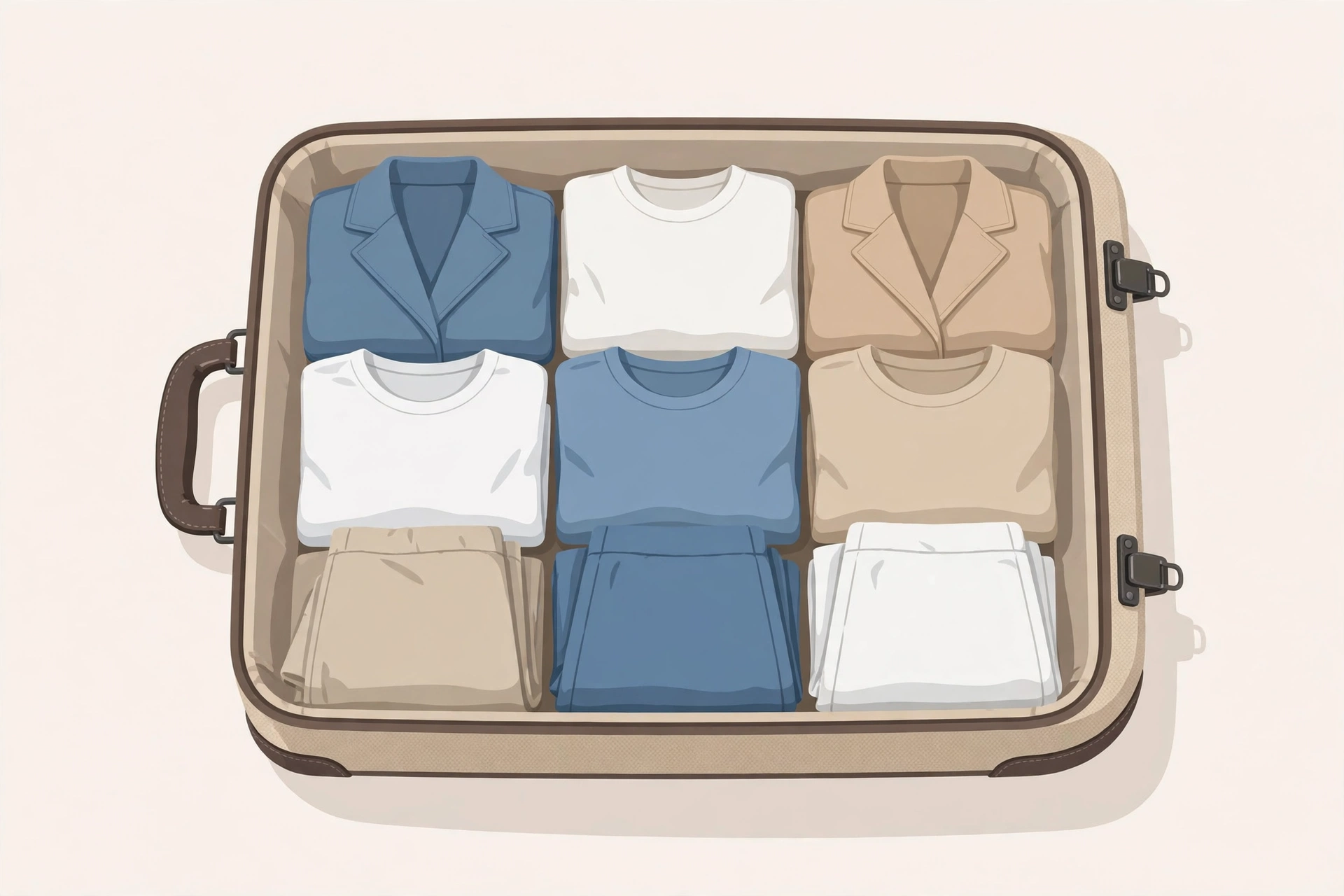
The sudoku packing method is a viral travel hack that turns just 9 clothing items — 3 tops, 3 bottoms and 3 layers — into up to 27 different outfits. You arrange the pieces in a 3×3 grid, like a sudoku block, with one top, one bottom and one layer in every row and column.
What Is the Sudoku Packing Method?
The sudoku packing method is a structured way to build a travel wardrobe using the logic of a sudoku puzzle. The grid borrows its logic from the classic number game — if you have never played it, our sudoku puzzle book guide is a good starting point. Instead of numbers, you use clothes: nine core pieces arranged in a three-by-three grid, where each row and each column contains exactly one top, one bottom and one layering piece — mirroring the way each digit appears once per row and column in sudoku.
The method went viral on social media, popularized by creators including Jean Wang on Instagram, and has since been covered by Apartment Therapy, Reader's Digest and NDTV. The appeal is simple: it replaces guesswork with a system, and it consistently produces more outfit combinations from fewer clothes than most people pack.
The core rule is strict but simple: every piece must work with every other piece. If one item only works with a single outfit, it does not belong in the grid. That mix-and-match discipline is what separates this packing hack from simply throwing clothes in a suitcase.
How the Sudoku Packing Method Works
Step 1: Choose your 9 core pieces
Shortlist three tops, three bottoms and three layering pieces suited to your destination's weather. Pick versatile, mix-and-match items in a coordinated colour palette — neutrals with one or two accent colours work best.
A sample selection for a week-long trip:
- Tops: white T-shirt, black blouse, striped knit top
- Bottoms: blue jeans, black trousers, linen shorts
- Layers: lightweight blazer, denim jacket, cardigan
Step 2: Lay out the 3×3 grid
Arrange the nine items in a grid so that every row and every column contains one top, one bottom and one layer. One common layout:
| Row | Column 1 | Column 2 | Column 3 |
|---|---|---|---|
| Row 1 | Top 1 | Bottom 1 | Layer 1 |
| Row 2 | Bottom 2 | Layer 2 | Top 2 |
| Row 3 | Layer 3 | Top 3 | Bottom 3 |
Scan any row and you have a complete outfit. Scan any column and you have another. Mix pieces from anywhere in the grid and they still work together.
Step 3: Test every combination
This is the crucial quality-control step. Check that each piece genuinely works with all the others — horizontally, vertically and diagonally across the grid. If a top clashes with one of the bottoms, replace it with something that works before you close the suitcase.
Step 4: Add shoes and accessories
Most versions of the method add two to three pairs of shoes and a small set of accessories on top of the nine core pieces. Fashion specialists at Joe Browns, quoted in coverage of the trend, recommend just two pairs of shoes: one comfortable everyday option and one smarter pair for evenings. Wear your bulkiest pair while travelling.
Accessories — a scarf, belt, a couple of pieces of jewellery — multiply the 27 base combinations further without taking up meaningful suitcase space.
Why It Works: The Maths Behind 27 Outfits
The number 27 comes from simple combinatorics: 3 tops × 3 bottoms × 3 layers = 27 possible combinations. Because every item was chosen to work with every other item, nearly all 27 combinations are wearable — unlike a randomly packed suitcase, where half the items only match one other thing.
In practice, most travellers report actually wearing far more of what they pack. And for the flight itself, puzzle fans can pass the time with the grid's namesake — our Killer Sudoku guide covers the number puzzle's trickiest variant. The method directly attacks the most common packing failure: bringing "just in case" items that never leave the suitcase.
Sudoku Packing vs Other Packing Methods
| Method | Core idea | Items | Outfits | Best for |
|---|---|---|---|---|
| Sudoku packing | 3×3 mix-and-match grid | 9 + shoes | Up to 27 | Carry-on trips, 4–10 days |
| 5-4-3-2-1 method | 5 tops, 4 bottoms, 3 accessories, 2 shoes, 1 hat | 15 | ~15+ | One-week trips |
| Capsule wardrobe | Small seasonal wardrobe of staples | 25–40 | 50+ | Long trips, minimalists |
| Bundle wrapping | Wrapping clothes around a central core | Varies | Varies | Wrinkle prevention |
| Ranger rolling | Rolling everything military-style | Varies | Varies | Maximum space saving |
The sudoku method's advantage is its built-in compatibility test. Other systems tell you how many items to bring; sudoku packing also tells you whether the items work together.
Tips to Get the Most Out of It
- Build around a colour palette. Two neutrals plus one accent colour guarantees everything coordinates.
- Choose multi-duty layers. A blazer that works for dinner and a cardigan that works for the plane beat single-purpose items.
- Dress for the trip, not the fantasy. Be honest about what you will actually do — hiking boots do not belong on a city-break grid.
- Add extra tops for longer trips. The method scales: thin, lightweight tops add combinations without much bulk.
- Do a trial run. Lay the grid out on your bed the night before. If assembling 27 outfits feels hard, one item is wrong — swap it.
- Keep fabrics wrinkle-resistant. Jersey, merino and technical fabrics survive a carry-on better than linen.
Common Mistakes to Avoid
- Packing statement pieces. A bold patterned item that only matches one bottom breaks the grid's logic.
- Ignoring the weather. Three layers are useless on a beach holiday; swap layers for swimwear or dresses and re-balance the grid.
- Forgetting laundry. For trips over a week, plan a mid-trip wash rather than doubling the grid.
- Skipping the compatibility check. The grid only works if you actually test every combination. Eyeballing it is how "orphan" items sneak in.
What is the sudoku packing method in simple terms?
It is a travel packing system where you choose 3 tops, 3 bottoms and 3 layers, arrange them in a 3×3 grid like a sudoku block, and make sure every item matches every other item — giving up to 27 outfits from 9 pieces.
How many outfits does the sudoku packing method give you?
Up to 27 outfit combinations: 3 tops × 3 bottoms × 3 layers. Accessories and shoes added on top multiply this further.
Who created the sudoku packing method?
The method went viral on social media and was popularized by creators including Jean Wang on Instagram; it has since been featured by outlets including Apartment Therapy and Reader’s Digest.
Does the sudoku packing method work for long trips?
Yes, with adjustments. For trips longer than 10 days, plan a mid-trip laundry day or add a few extra lightweight tops to the grid rather than packing a second full set of clothes.
What shoes go with the sudoku packing method?
Most guides recommend two to three pairs: one comfortable everyday pair, one smarter pair for evenings, and optionally sandals or trainers. Wear the bulkiest pair while travelling to save suitcase space.
Can you use the sudoku packing method for business travel?
Yes. Choose work-appropriate pieces — for example, blouses, tailored trousers and a blazer — and the same grid logic produces a week’s worth of office outfits from a carry-on.
Is the sudoku packing method the same as a capsule wardrobe?
Not exactly. A capsule wardrobe is a small seasonal collection of staples; the sudoku method is a specific 9-item grid system with a built-in compatibility rule. Think of sudoku packing as a travel-sized capsule wardrobe with stricter maths. *Sources: Apartment Therapy (“I Tried the Sudoku Packing Method”, Mar 2026), Reader’s Digest, NDTV, EdinburghLive.*