
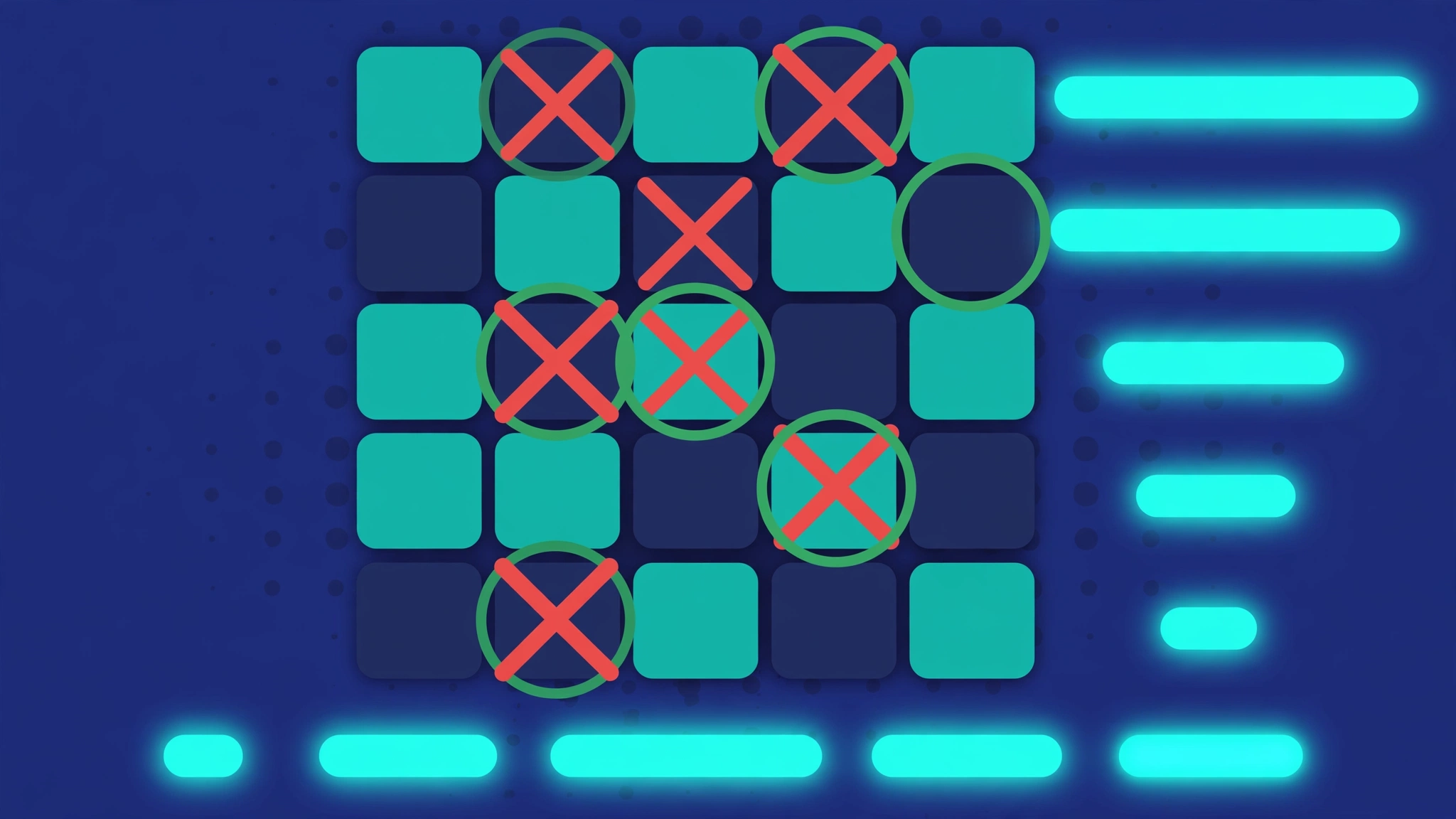
Sumplete Unlimited is the free endless mode of Sumplete, the number logic puzzle where you delete numbers from a grid so that every row and column adds up to its target sum. Play unlimited puzzles in grid sizes from 3×3 to 9×9 with five difficulty levels — no login required. It's a fresh take on Sudoku-style puzzling that flips the core mechanic on its head: instead of filling numbers in, you cross them out.
What Is Sumplete?
Sumplete is a free daily number logic puzzle inspired by Sudoku, Kakuro, and Hitori. The premise is simple but surprisingly addictive:
- You're given a grid completely filled with numbers.
- Every row and column has a target sum shown on its edges.
- Your job is to delete numbers until the numbers left in each row and column add up to exactly the target sum.
- When a row or column reaches its correct total, its sum indicator lights up.
- Light up every row and column, and you've solved the puzzle.
The game has three main modes: Daily 5×5, Daily 7×7, and Unlimited mode. The daily modes give everyone the same puzzle each day — a race against the clock — while Unlimited mode lets you play as many puzzles as you like at your own pace [1][2].
Sumplete has one of the best-documented origin stories in the daily-games scene. London-based programmer Daniel Tait asked ChatGPT to invent a Sudoku-like game that didn't exist; after several attempts the chatbot pitched "Sum Delete," then helped code a working HTML/JavaScript version in about 30 seconds and coined the portmanteau name "Sumplete." Tait bought sumplete.com and published it in March 2023 (TechSpot). A Gizmodo follow-up noted the game closely resembles older mobile titles like Summer and Rullo, so ChatGPT's claim of originality was shaky — but Sumplete's browser version is what made the format mainstream.
What Is Sumplete Unlimited?
Sumplete Unlimited is the free-play mode at sumplete.com/unlimited. Unlike the daily challenges, it has no limit on how many puzzles you can play, and it gives you full control over the difficulty:
- Grid sizes from 3×3 (beginner) to 9×9 (expert). A 3×3 Easy puzzle takes about 30 seconds; a 9×9 Master puzzle is a serious workout.
- Five difficulty levels: Easy, Medium, Hard, Expert, and Master.
- 100% free, no login needed. You can jump in and play immediately.
- Optional free accounts can track win streaks, solve times, leaderboards, and sync progress across devices [2].
If the daily puzzle leaves you wanting more — or you want to practice a specific grid size before the real thing — Unlimited mode is where you go.
Sumplete Unlimited vs Daily Mode: Key Differences
| Feature | Sumplete Unlimited | Daily 5×5 / Daily 7×7 |
|---|---|---|
| Number of puzzles | Unlimited, as many as you want | One per day (shared by everyone) |
| Grid sizes | 3×3 to 9×9 | Fixed (5×5 or 7×7) |
| Difficulty levels | Easy, Medium, Hard, Expert, Master | Set by the day's puzzle |
| Focus | Practice and experimentation | Speed and daily streaks |
| Login required | No (optional for stats) | No (optional for stats) |
| Cost | Free | Free |
The Daily 5×5 is the "everyone solves the same grid" challenge — great for comparing times with friends. Unlimited mode is the training ground: try the 3×3 to learn the moves, then work your way up to the 9×9 monsters [1].
How to Play Sumplete: Step-by-Step
The controls are intuitive — each cell cycles through three states:
- Tap once to delete a number (marked with a red cross).
- Tap again to mark it as kept (green circle).
- Tap a third time to reset the cell back to unknown.
This means mistakes are free. You can change your mind at any time, which makes Sumplete much more forgiving than pen-and-paper logic puzzles [5].
Solving Strategy: The Visual Guide Approach
Logic-puzzle site GridJoy breaks the game down into two ideas to hold:
- Kept numbers in a line must total its target. Cross out the rest.
- Rows and columns share cells. A number you keep for a row also counts toward its column — the two directions keep each other honest [3].
And here's the best opening move, which needs no adding at all: look for a number bigger than the target. In a row that must total 5, a sitting 6 can never be part of the answer — keeping it overshoots the target all by itself. Cross it out, free of charge [3].
From there, the deductions cascade: one crossing forces the next, and each row-and-column tag-team breaks the puzzle open. AARP's FAQ for the game gives the same advice — hunt the too-big numbers first, and remember that logical deduction matters more than speed or advanced math skills.
7 Tips for Sumplete Unlimited
- Start with 3×3 Easy. It takes about 30 seconds and teaches you the core moves. From there, bump up to 4×4 or 5×5. If you can beat the Daily 5×5 without hints, you're ready for bigger grids [2].
- Attack the smallest targets first. Clearing small sum clues first removes excess cells and makes the bigger clues easier to solve [1].
- Delete the too-big numbers. Any number larger than its row or column target can never stay — these are free eliminations [3].
- Spot the "must keep" cells. If crossing out a number would make the row's remaining total fall below the target, that number must stay [3].
- Use columns to break row ties. When a row can't tell you which cell to cross, look down its columns — the other direction often answers the question [3].
- Mark keeps explicitly. Using the green "keep" circle (rather than just leaving cells unknown) turns hidden assumptions into visible deductions.
- Move up difficulty gradually. Hard grids change the feel of the puzzle; Master 9×9 demands real patience. The official site's hard mode guide covers the tactics that matter on bigger grids [1].
Sumplete vs Sudoku vs Kakuro: What's the Difference?
| Puzzle | Grid-based | Mechanic | Math needed |
|---|---|---|---|
| Sumplete | Yes | Delete numbers to hit target sums | Basic addition |
| Sudoku | Yes | Fill digits 1–9 with no repeats | None |
| Kakuro | Yes | Fill cells so runs match clue sums | Addition |
Sumplete shares Sudoku's grid-based structure, but the gameplay is reversed: instead of filling numbers in, you remove them. Like Kakuro it uses arithmetic, but the puzzle is flipped — every row and column has a target sum, and you delete numbers until what's left adds up [2].
Where to Play Sumplete Unlimited Free
The official game lives at sumplete.com — the Unlimited mode page (sumplete.com/unlimited) is the real deal: free, no login, grid sizes from 3×3 to 9×9. The daily challenges are on the same site.
Sumplete is also offered on game portals like AARP's games section, which carries its own FAQ for the game — a sign of how quickly it's become a mainstream casual puzzle [5].
Play Plusword Too
If you enjoy grid puzzles with a word-game twist, try Plusword — the daily crossword-style word puzzle. Learn how to play Plusword or see how it compares in our Plusword vs Wordle breakdown.
Sources
sumplete.com — official game and daily puzzles; sumplete.com/unlimited — free endless mode; GridJoy — strategy guide; AARP — game FAQ.
What is Sumplete?
Sumplete is a free daily number logic puzzle inspired by Sudoku, Kakuro, and Hitori. You delete numbers from a grid so that each row and column adds up to its target sum [1].
What is Sumplete Unlimited?
Sumplete Unlimited is the free-play mode that lets you play unlimited puzzles in any grid size from 3×3 to 9×9, with five difficulty levels — no login required [2].
Is Sumplete Unlimited free?
Yes — 100% free, no login needed. Play as many puzzles as you want in any size and difficulty [2].
What grid sizes can I play in Sumplete Unlimited?
Grids from 3×3 for beginners up to 9×9 for expert players [2][5].
How is the Daily 5×5 different from Unlimited mode?
The Daily 5×5 is one shared puzzle per day — everyone solves the same grid and the goal is speed. Unlimited mode is self-paced practice with any size and difficulty [1].
Do I need to be good at math to play Sumplete?
No — basic addition is all you need. Logical deduction is more important than speed or advanced math skills [5].
Can I undo a move in Sumplete?
Yes. Tap a cell a third time to cycle it back to its unknown state, so mistakes cost you nothing [5].
Is Sumplete similar to Sudoku?
It shares Sudoku’s grid-based structure, but the mechanic is reversed: instead of filling numbers in, you cross them out [2][5]. —