
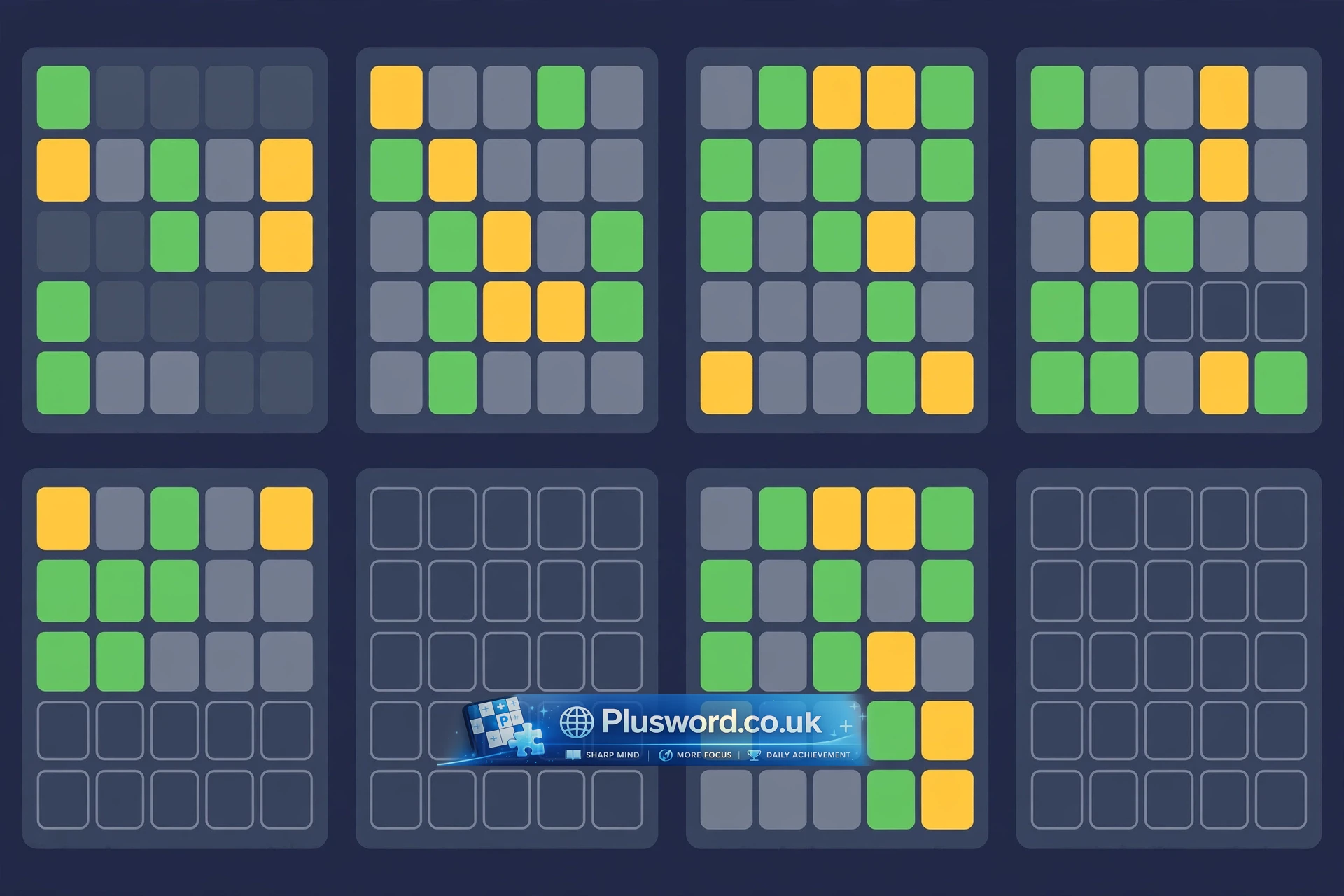
If Wordle ever felt too easy, Quordle is the game that fixes that. It takes the five-letter guessing format you already know and multiplies it by four — four hidden words, four grids, and just nine guesses shared between all of them.
Quordle is a free browser word game where you solve four five-letter words at the same time. Every guess you type appears on all four grids at once, and each grid colours your letters green, yellow or grey based on its own hidden word. You win by cracking all four words before your nine guesses run out.
It sounds manageable. It is not. That is exactly why millions of people play it every day.
What Is Quordle?
Quordle is a Wordle spin-off released in February 2022 by developer Freddie Meyer, built from an early prototype by engineer David Mah. Meyer was inspired by Dordle — a two-grid Wordle clone — and decided two grids was not ambitious enough.
He was right. Within weeks, Quordle had pulled in one million players. A year later, in January 2023, it was acquired by Merriam-Webster, which now runs the official game on its website.
The concept is simple: one screen, four Wordle-style grids arranged in a square. You type a single five-letter guess and it lands on every grid simultaneously. Each board then reacts to that guess independently, showing you colour-coded clues for its own secret word. Your job is to solve all four before you run out of attempts.
How to Play Quordle
If you can play Wordle, you already know 90% of Quordle. The rules are nearly identical — the difference is you are juggling four puzzles at once.
- Type any valid five-letter English word using your keyboard or the on-screen keyboard, then press Enter.
- Your guess appears on all four grids at the same time. One guess, four sets of feedback.
- Read the colours on each board — every grid judges your letters against its own hidden word.
- Keep guessing. You have nine total guesses to solve all four words.
- A solved grid locks. Once you crack a word, that board stops updating and you can focus on the rest.
- Win by solving all four words within nine guesses. Miss even one and the game is over.
What the Colours Mean
Every grid uses the same three colours, and each colour is judged separately per board:
- Green — the letter is in the word and in the correct position.
- Yellow — the letter is in the word but in the wrong position.
- Grey — the letter is not in that word at all.
The tricky part: a letter can be green on one grid, yellow on another, and grey on a third — all from the same guess.
Quordle Rules at a Glance
| Rule | Detail |
|---|---|
| Words to solve | 4 (all five letters) |
| Total guesses | 9, shared across all four grids |
| Feedback | Green, yellow, grey per grid |
| Daily puzzle | Yes — one new set of four words per day |
| Practice mode | Yes — unlimited random puzzles |
| Platform | Browser (desktop and mobile) |
| Cost | Free, no account needed |
Daily Mode vs Practice Mode
The daily puzzle is the heart of Quordle. One set of four words drops each day, and everyone plays the same set — which is why you can compare scores with friends and keep a daily streak going. Finish it before midnight in your timezone or your streak resets.
Practice mode is where you actually get good. It deals you endless random puzzles with no daily limit, so you can test different starting words and build the pattern recognition the daily game demands.
Quordle vs Wordle: What’s the Difference?
| Feature | Wordle | Quordle |
|---|---|---|
| Words per game | 1 | 4 |
| Guesses allowed | 6 | 9 |
| Guesses per word (effectively) | 6 | Just over 2 |
| Grids | 1 | 4, all played simultaneously |
| Practice mode | No | Yes |
| Difficulty | Medium | Hard |
The raw numbers tell the story. Wordle gives you six guesses for one word. Quordle gives you nine guesses for four words — effectively a little over two guesses per word. You get more information per guess (four boards’ worth of feedback), but far less room for error. After your opening guesses, you often need to identify a correct word with almost every remaining turn.
7 Tips to Win at Quordle
Quordle punishes random guessing. With only nine attempts for four words, every guess has to earn its place. These strategies are the ones experienced players actually use.
1. Open With Two or Three Information-Gathering Words
Do not try to solve anything with your first guess. Your opening words exist to test as many common letters as possible. Pick words covering all five vowels (A, E, I, O, U) plus frequent consonants like S, T, R, N, L — with no repeated letters.
Proven opening combinations:
- STARE → DOILY → PUNCH — 15 unique letters, all five vowels, nine top consonants
- AUDIO → STERN → LYMPH — vowel-heavy start, strong consonant follow-up
- CRANE → LOUSY — a tighter two-word opener if you want more adaptive guesses later
The exact words matter less than the coverage principle: all vowels, no repeats, common consonants.
2. Never Repeat a Grey Letter
This is the easiest way to waste a guess. A grey letter is dead information — typing it again teaches you nothing new. Before every guess, scan for letters you have already ruled out and keep them off the board. Nine guesses is too tight for filler.
3. Solve the Easiest Board First
Once patterns emerge, stop spreading your attention evenly. Pick the grid with the most green and yellow clues and finish it. Each solved word narrows the letter pool for the remaining boards and, just as importantly, frees up your mental bandwidth for the harder ones.
4. Use Elimination Guesses on Trap Patterns
Sooner or later you will stare at something like _ATCH and realise the answer could be MATCH, BATCH, LATCH, CATCH, WATCH, HATCH or PATCH. You cannot afford to try them one by one — so guess a word that tests several of the uncertain letters at once. One well-chosen elimination guess can rule out five wrong answers in a single turn.
5. Remember Double Letters Exist
When you are stuck, ask yourself whether the word might repeat a letter. Players constantly overlook answers like LLAMA or ESSAY because they are busy slotting unique letters into every position. Double letters come up often enough that “have I considered a repeat?” should be a standing checkpoint.
6. Reposition Yellows Deliberately
A yellow letter tells you two things: the letter is in the word, and it is not in the position you tried. Track the positions you have ruled out for each yellow letter and do not put it back where it failed. In Quordle this bookkeeping matters more than in Wordle because you are tracking it across four words at once.
7. Train Openings in Practice Mode
Do not experiment with new starting words on your daily streak. Use practice mode to test openings, learn how much information each one typically reveals, and discover which combinations click for you. When the daily puzzle arrives, you want your first three guesses to be automatic.
Common Mistakes to Avoid
- Guessing randomly instead of working from the colour feedback on every grid.
- Repeating letters early — especially vowels you have already placed.
- Chasing one hard board while easy wins sit unsolved on the other grids.
- Ignoring yellow repositioning and putting letters back in ruled-out spots.
- Forgetting double letters when a word refuses to resolve.
- Burning guesses on trap patterns instead of using one elimination guess.
Conclusion
Quordle is what happens when Wordle grows teeth: four five-letter words, four grids, nine shared guesses, and colour feedback pulling you in four directions at once. Learn the rules, open with two or three letter-covering words, solve the easy boards first, and spend your remaining guesses on smart elimination instead of hopeful stabs.
If you want a gentler entry point into daily word games, try Parseword or Clickword first — then come back and take on all four grids.
Frequently Asked Questions
How many guesses do you get in Quordle?
Nine guesses total, shared across all four word grids — there is no separate guess count per board.
What is the difference between Quordle and Wordle?
Wordle gives you one five-letter word in six guesses; Quordle gives you four five-letter words in nine guesses, with every guess applying to all four grids at once.
Is Quordle free to play?
Yes. It is free in your browser with no account, no download and no daily limit in practice mode.
Who created Quordle?
Quordle was created by Freddie Meyer in February 2022 from a prototype by David Mah, and acquired by Merriam-Webster in January 2023.
Can I play more than one Quordle per day?
Yes. The daily puzzle is one per day, but practice mode gives you unlimited random puzzles.
What are the best starting words for Quordle?
Words covering all five vowels with no repeated letters, such as STARE, AUDIO, CRANE or SLATE — ideally two or three openers that test 10–15 unique common letters.