
Most crosswords are solved purely for fun. Prize crosswords add something extra: solve the grid, submit your entry, and you could win a prize. They have been a staple of newspapers and puzzle magazines for decades — and they are still running today.
This guide explains what prize crossword clues are, how the competitions work, where to find them, and practical tips that genuinely improve your chances.
What Is a Prize Crossword?
A prize crossword is a standard crossword grid with a competition attached. You solve every clue, submit your completed entry before the deadline, and correct entries go into the running for a prize — anything from book tokens and vouchers to significant cash jackpots, depending on the publisher.
The clues themselves are normal crossword clues. What makes them “prize” clues is the context: accuracy matters more than ever, because a single wrong letter can invalidate your entry.
How Prize Crosswords Work
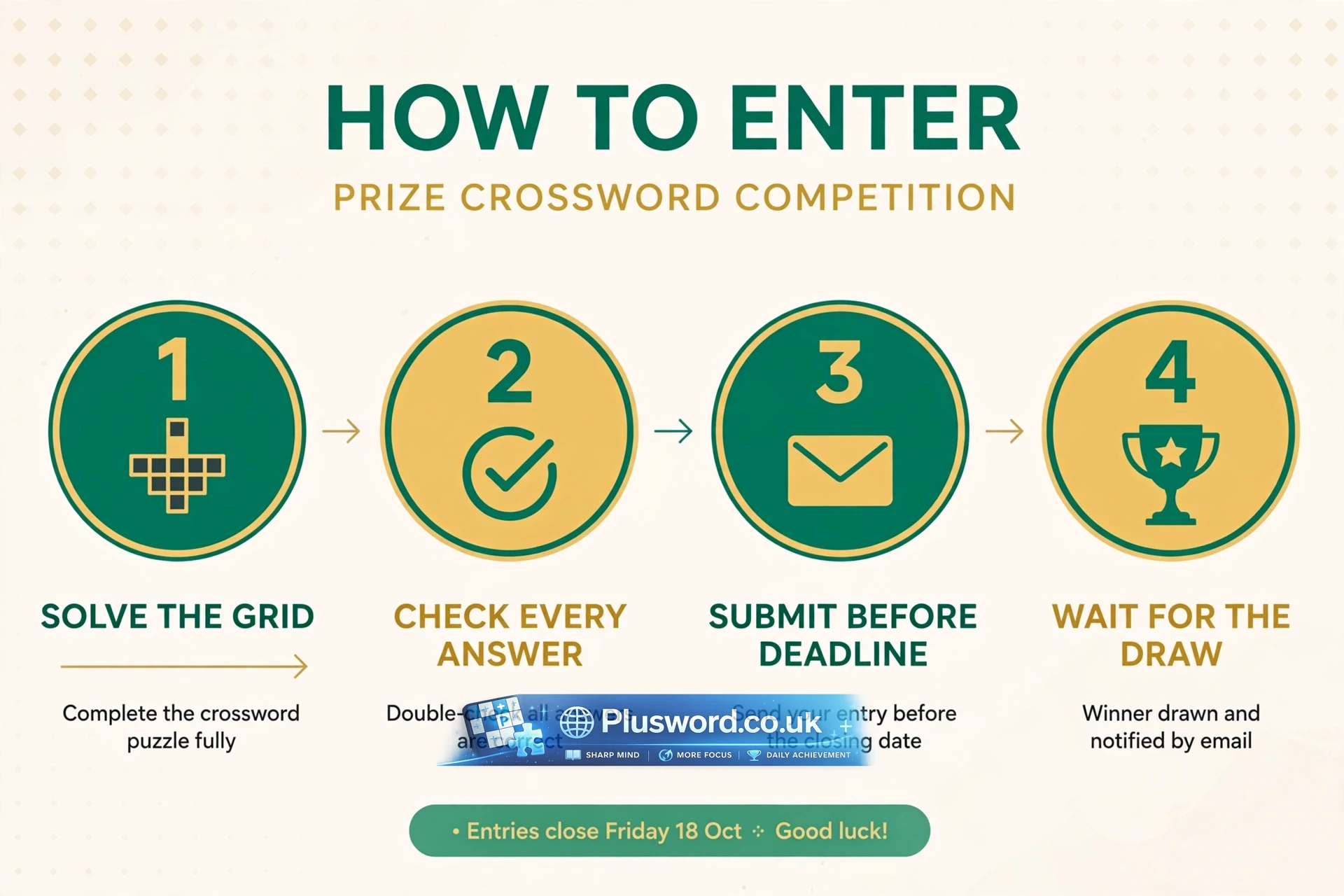
The mechanics vary by publisher, but the pattern is almost always:
- Solve the entire grid. Every answer must be correct — most competitions disqualify entries with any error.
- Submit your entry before the deadline. Depending on the publisher this means an online form, an email, or posting a clipped coupon. Deadlines are strict.
- Winner selection. The most common format is a random draw from all correct entries. Some competitions reward the first correct entry received; a few use tiebreaker questions. Always read the specific rules.
- Check the terms. Note eligibility (some are limited by country or age), entry limits (usually one per person), and how winners are notified.
Where to Find Prize Crosswords
- National newspapers. Many run a weekly prize crossword in their puzzle section or weekend magazine — check the puzzles page of your favourite paper.
- Puzzle magazines. Dedicated crossword magazines frequently include prize competitions with entry forms inside.
- Crossword and puzzle websites. Several online puzzle communities run regular competitions with leaderboards and prizes.
- Seasonal specials. Christmas and summer editions often carry bigger prizes.
A quick search for “prize crossword competition” plus your country will surface what is currently running.
Quick vs Cryptic Prize Crosswords
Know which type you are entering — they demand different skills:
- Quick (straight) crosswords use direct definitions: “Capital of France (5)” means PARIS. Vocabulary and general knowledge win here.
- Cryptic crosswords use wordplay: each clue is a small puzzle with a definition plus a wordplay recipe. They take practice but are deeply satisfying.
If you have never solved cryptics, enter quick prize crosswords first and learn cryptic conventions separately before tackling a cryptic competition.
Worked Example: Solving Like It Counts
Take the clue “Capital of France (5)”. The definition points straight at PARIS — five letters, fits. But in a prize crossword you do not stop there. You verify:
- Check every crossing answer. If 1-down crosses the P, does your 1-down answer genuinely start with P?
- Re-read the clue for tricks. Could “capital” mean something else (uppercase letter? money?) in a cryptic? In a quick crossword, the straightforward reading is almost always right.
- Only when the whole grid is consistent do you submit.
That verification habit — solve, then prove it — is what separates winning entries from near-misses.
Tips to Improve Your Chances
- Draft before committing. Solve in pencil or a draft copy, then transfer clean answers to your entry.
- Verify every crossing. One unchecked intersection is the most common way entries fail.
- Submit early. Do not leave entry to deadline day — websites go down and post gets delayed.
- Learn the common answers. Crossword setters reuse favourites (obscure rivers, poets, abbreviations). A personal word list pays off fast.
- Attempt the right difficulty. A quick prize crossword you can complete beats a cryptic one you abandon.
Frequently Asked Questions
Are prize crosswords free to enter?
Many are free, especially online competitions. Newspaper prize crosswords usually just require buying the paper or holding a subscription. Always check the terms — legitimate competitions never ask for payment to claim a prize.
How are prize crossword winners chosen?
It varies by publisher. The most common method is a random draw from all correct entries received before the deadline. Some award the first correct entry; others use a tiebreaker question. The rules are always published with the competition.
Can beginners win prize crosswords?
Yes. Accuracy beats speed in almost every format — a careful beginner with a fully correct grid has exactly the same chance in a random draw as an expert. Start with quick crosswords rather than cryptics.
What is the difference between a prize crossword and a regular crossword?
The grid and clues work the same way. The difference is the competition layer: a submission process, a deadline, eligibility rules, and a prize for winners. Regular crosswords are just for personal satisfaction.
Do I need to be an expert to enter?
No. Most prize crosswords are designed for ordinary solvers, and many are quick rather than cryptic. If you can finish a daily quick crossword, you can enter.
Final Thoughts
Prize crosswords reward the same skills as ordinary solving — vocabulary, patience, and careful checking — with the added thrill of a possible win. Learn whether you are entering a quick or cryptic competition, verify every crossing before you submit, and get your entry in early.
For more puzzle practice, see our guides to daily telegraph puzzles and evening standard puzzles — and warm up with our free daily Plusword puzzle.