
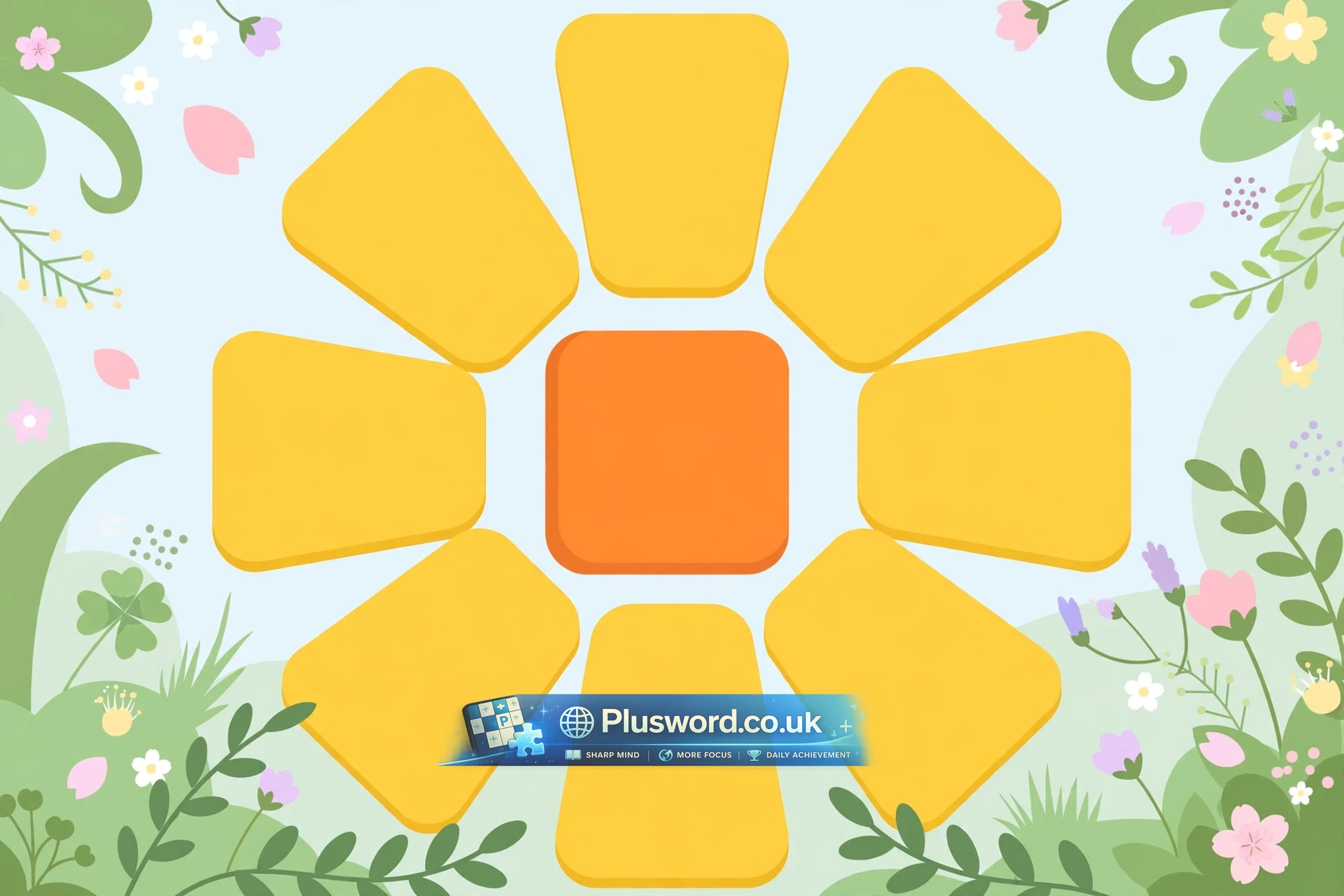
If you’ve ever played the New York Times Spelling Bee, Blossom will feel instantly familiar. It’s a daily word game from Merriam-Webster — yes, the dictionary publisher — built around seven letters arranged like a flower. Your task sounds simple: build words from those letters.
Here’s the twist that changes everything: you only get 12 guesses.
That limit is what makes the Blossom word game so addictive. Instead of tracking down every possible word, you have to pick your words with care. One long, clever word can outscore five short ones. In this guide, you’ll learn the official rules, how the scoring system works, and the strategies that separate casual players from top scorers.
What Is Blossom?
Blossom is a free daily word game created by Merriam-Webster, America’s best-known dictionary publisher and an Encyclopaedia Britannica company with more than 180 years in language. It has become one of the most popular alternatives to the NYT Spelling Bee.
The game board is a flower-shaped grid holding seven letters: six sit in the petals, and one sits in the centre. Every word you build must include that centre letter, and every word must be at least four letters long. Letters can be used more than once in a single word, which opens the door to much longer answers.
Where Spelling Bee rewards finding as many words as possible, Blossom flips the idea. You submit just 12 words per puzzle, so quality beats quantity. Every guess matters, and the scoring rewards players who think big.
How to Play Blossom: The Rules
The rules are easy to learn but take real thought to master. Here’s everything you need to know before your first puzzle:
| Rule | What It Means |
|---|---|
| Submit 12 words | Each puzzle allows exactly 12 word submissions — no more |
| Minimum 4 letters | Words shorter than four letters don’t count |
| Use the centre letter | Every word must include the centre letter |
| Letters can repeat | Reuse any letter as many times as you like in one word |
| Merriam-Webster dictionary | Only dictionary-accepted words count |
| No proper nouns | Names, abbreviations, hyphenated words, and slang are rejected |
Why the 12-Word Limit Matters
This is the rule that defines Blossom. With only 12 submissions per puzzle, every guess has to earn its place. Short four-letter words are legal, but they burn through your guesses for almost no points. Smart players brainstorm far more than 12 words, then submit only the longest and highest-scoring ones. Think of it as a shortlist: your final answer is a dozen words, chosen from dozens of candidates.
How Scoring Works in Blossom
Blossom’s scoring is refreshingly transparent: longer words earn more points, full stop. The game uses a fixed points table based on word length, plus two kinds of bonuses. Here’s the breakdown:
| Word Length | Points |
|---|---|
| 4 letters | 2 |
| 5 letters | 4 |
| 6 letters | 6 |
| 7 letters | 12 |
| 8 letters | 15 |
| 9 letters | 18 |
| 10 letters | 21 |
| Each additional letter | +3 |
Notice the jumps. A seven-letter word (12 points) is worth six times a four-letter word (2 points). That’s why experienced players almost never submit short words — a single eight-letter answer beats four four-letter words combined.
Bonus Letters
Some puzzles mark one petal in yellow. That letter is the bonus letter, and it changes after every guess. Using it is optional, but each time it appears in one of your words, you earn 5 extra points. Stack it inside a long word and the points pile up fast. One well-known example: the ten-letter pangram ARTERIALLY scored 21 points for length, plus 7 for the pangram, plus 10 for using the bonus letter A twice — 38 points from a single word.
Pangrams
A pangram is a word that uses all seven letters from the flower at least once. Finding one earns a 7-point bonus on top of the word’s normal score, and most puzzles contain more than one. Because pangrams are long by definition, they combine big length points with the bonus — making them the single most valuable words in the game.
Blossom vs NYT Spelling Bee
Blossom is often called a Spelling Bee alternative, and the resemblance is real — both use seven letters and a mandatory centre letter. But the two games reward very different skills:
| Feature | Blossom | NYT Spelling Bee |
|---|---|---|
| Maker | Merriam-Webster | The New York Times |
| Words per puzzle | 12 only | Unlimited |
| Minimum word length | 4 letters | 4 letters |
| Centre letter | Required in every word | Required in every word |
| Letter reuse | Allowed | Allowed |
| Word list | Merriam-Webster dictionary | NYT word list |
| Scoring | Points per word length + bonuses | Points toward rank tiers |
| Pangram bonus | +7 points | +7 points |
| Bonus letters | Yes (yellow petal, +5 per use) | No |
| Cost | Free | Paid subscription |
| Time limit | None | None |
The biggest practical difference is access: Blossom is completely free, while Spelling Bee sits behind the NYT Games subscription. If you love the format but not the paywall, Blossom is the obvious choice.
7 Tips to Score Higher in Blossom
You now know the rules and the maths. These seven strategies will turn that knowledge into consistently higher scores:
- Hunt pangrams first. Start every puzzle by looking for the pangram. It’s worth hunting because a pangram combines high length points with a 7-point bonus, and spotting one early shapes the rest of your answers. Try pairing the centre letter with common endings like -ING, -TION, and -NESS to see if all seven letters fall into place.
- Build with prefixes and suffixes. Short words become long words with the right attachments. Prefixes like RE-, UN-, and PRE- and suffixes like -ING, -ED, -ER, and -EST can stretch a basic word by several letters. Once you find a decent word, ask yourself: can I make it longer? In a game where every extra letter means more points, this habit alone can lift your score.
- Reuse letters shamelessly. Many new players don’t realise letters can repeat. There is no limit — the same letter can appear three, four, or more times in one word. Words with doubled suffixes (-LLY, -EER) or repeated vowels suddenly become possible. Always check whether repeating a strong letter creates a longer valid word.
- Draft more than 12, then cut. Never submit the first 12 words that come to mind. Jot down every candidate you can find — aim for 25 or 30 — then rank them by length and bonus potential. Your final 12 should be the strongest of the bunch. This single change in approach is what separates average scores from leaderboard-worthy ones.
- Chase the bonus letter. The yellow bonus letter is worth 5 points every time you use it, and it changes after each guess — so plan ahead. Before submitting a word, check which letter is currently highlighted and see if you can work it in, ideally twice. Words that combine length, a pangram, and the bonus letter are the highest-scoring plays in the game.
- Skip short words. Four- and five-letter words are traps. They feel productive, but at 2 and 4 points each, they waste guesses that could have earned 15 or more. Unless you’re truly stuck, keep every slot for words of six letters or more. Twelve long words will always beat twelve mixed ones. If you enjoy building words under constraints, Clickword is another word-building game to try.
- Shuffle and step away. Stuck staring at the same seven letters? Hit the shuffle button. Rearranging the petals gives your brain a fresh angle and often reveals words that were hiding in plain sight. And since there’s no timer, walking away for ten minutes works wonders — you’ll be surprised what appears when you return.
Where to Play Blossom for Free
Blossom lives on Merriam-Webster’s Games website, where the daily puzzle is completely free — no subscription, unlike some rival word games. A new puzzle drops every day, and you can also dig into the archive to replay older puzzles you missed. The site does show ads during play, since there’s no paid ad-free tier, but the game itself costs nothing. For more word-game help, our Dan Word crossword solver guide is another free word-game resource.
Conclusion
Blossom takes the familiar seven-letter word game and adds one brilliant constraint: just 12 guesses. That single rule turns a casual vocabulary exercise into a genuine strategy game, where planning, long words, pangrams, and bonus letters decide your score.
It’s free, it’s daily, and it comes from the most trusted name in dictionaries. If Spelling Bee’s paywall has been keeping you out — or you simply want a fresh daily challenge — give Blossom a try tomorrow morning. And if you enjoy daily word puzzles, Parseword is another one worth adding to your routine. Your first Blossom pangram is closer than you think.
Blossom Word Game FAQs
Is the Blossom word game free to play?
Yes. Blossom is completely free on Merriam-Webster’s Games website, including access to the puzzle archive — no subscription needed.
Who makes the Blossom word game?
Blossom is made by Merriam-Webster, America’s leading dictionary publisher and an Encyclopaedia Britannica company.
How many words can you submit in Blossom?
Exactly 12. Each daily puzzle allows 12 word submissions, so choose longer, higher-scoring words.
What is a pangram in Blossom?
A pangram is a word that uses all seven letters of the flower grid. Each pangram earns a 7-point bonus on top of its normal score.
Can you reuse letters in Blossom?
Yes. Any letter can be used multiple times within a single word — there’s no limit on repetition.
Is Blossom the same as Spelling Bee?
No. Blossom limits you to 12 words per puzzle and adds bonus letters, while Spelling Bee allows unlimited guesses and uses rank tiers.